athena splits RCM work with its practices. It calls the model we do/you do. athena does some of the work (“we do”) and the practice does the rest (“you do”). Practices have hired outsourced billing companies for years to handle the “you do” work. New RCM companies are competing to complete the “you do” work with AI, but they’re also creeping into the “we do”.
Filling in the gaps in athena’s RCM isn’t new. athena doesn't collect patient balances under $9.99, so somebody built a company that does. Competing with athena’s rules engine is different.
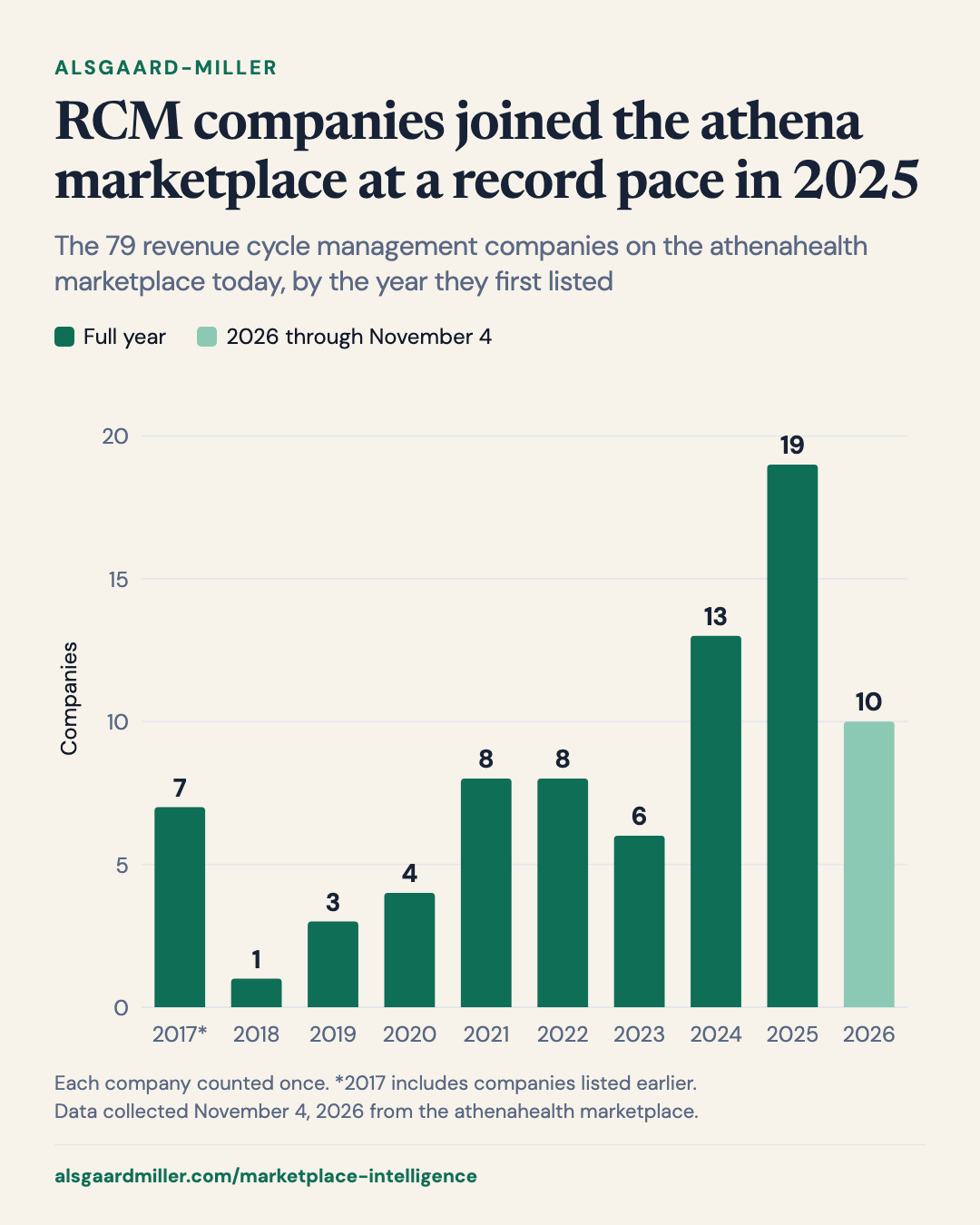
Of the 79 RCM companies on the marketplace today, 42 listed since the start of 2024. Last year set the record with 19.
Collector is the product athena was built on, and the rules engine was the original pitch. It tells you what the payers want before they reject your claim, so your claims go out clean and you get paid faster. That's what practices bought.
Two years ago athena set a goal to cut practices' RCM work in half. HTN reported at Thrive last week athena reported it had reduced practice RCM work by 6% and the initial denial rate went from 5.7% to 5.2% against a goal of 4%. On the brighter side, the turnaround time for adding new rules to the rules engine dropped from 57 days to 19.
Now those same practices are paying for Collector, buying a second rules engine on top of it, and still paying people to work claims. What is going on?
The athena marketplace is gaining power
Startups move faster than incumbents. The marketplace (originally called More Disruption Please, which tells you how they were thinking) was a defense. If a company was going to build something better than athena, better they build it on athena and reach practices through athena than take practices to a new platform. Practices, in turn, would stick around to get access to the newest tech.
It worked. athena didn't get disrupted. But fifteen years of partners proving ROI one category at a time adds up. athena let the marketplace hold online scheduling and self check-in for years, and Phreesia, Epion, and Qure4u grew up in the gap. The marketplace was built to keep the disruptors close. It also gave them a place to gain strength.
The gap is the widest it has ever been
athena has the best technology it has ever had. I mean that. The gap between what athena ships and what's on the marketplace is also the widest it has ever been, and it's growing.
Practices further down the adoption curve have stopped asking if they should buy from partners and started to ask which one they should buy from. With just under 600 partners, it can be hard to make a decision. athena has rolled out tiers, Preferred and Alliance, to help practices choose.
The increase in marketplace partner adoption has coincided with complaints from practices about total cost of ownership. Which at first I found funny. If each partner proves its ROI, what is there to complain about? Then I realized they're complaining that athena is expensive. Not because the price went up. Because they're paying for athena and then going out and buying the solutions that do what they thought athena was going to do.
athena feature announcements don’t freeze the marketplace
athena is building more features than ever, but it hasn’t pulled many customers away from marketplace partners. A few years ago athena released self check-in workflows, including custom forms. The native forms limit what you can customize because they fit a legacy data model. For many practices that's a dealbreaker. Some switched to the native forms. Plenty stayed with the partner they’ve been using to build exactly the forms they want, all while continuing to pay for the athena version (it's bundled, there's no line item to cut).
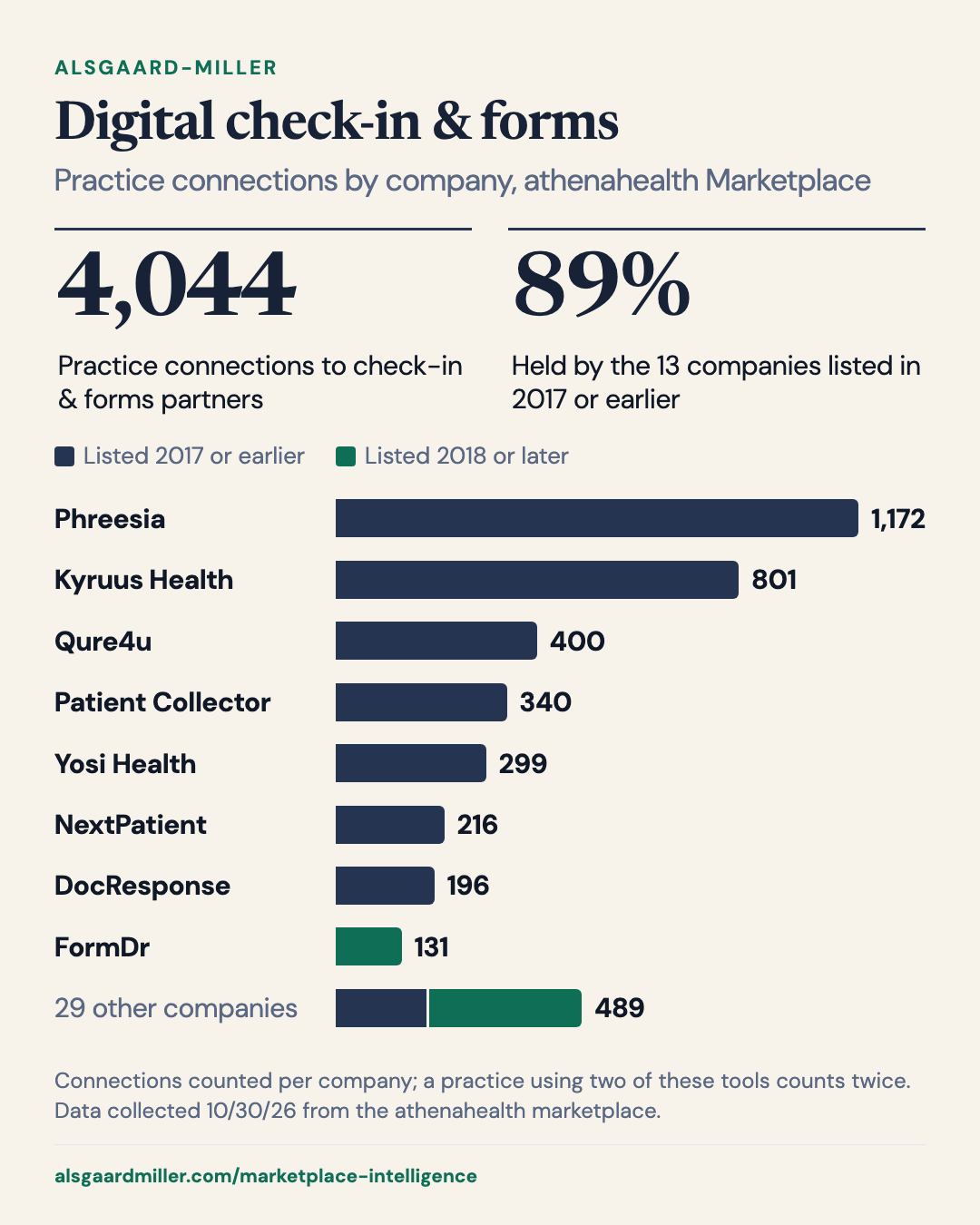
Partners listed in 2017 or earlier still hold 89% of check-in connections. Would we see that number drop if athena updates the forms functionality to allow the customization practices want?
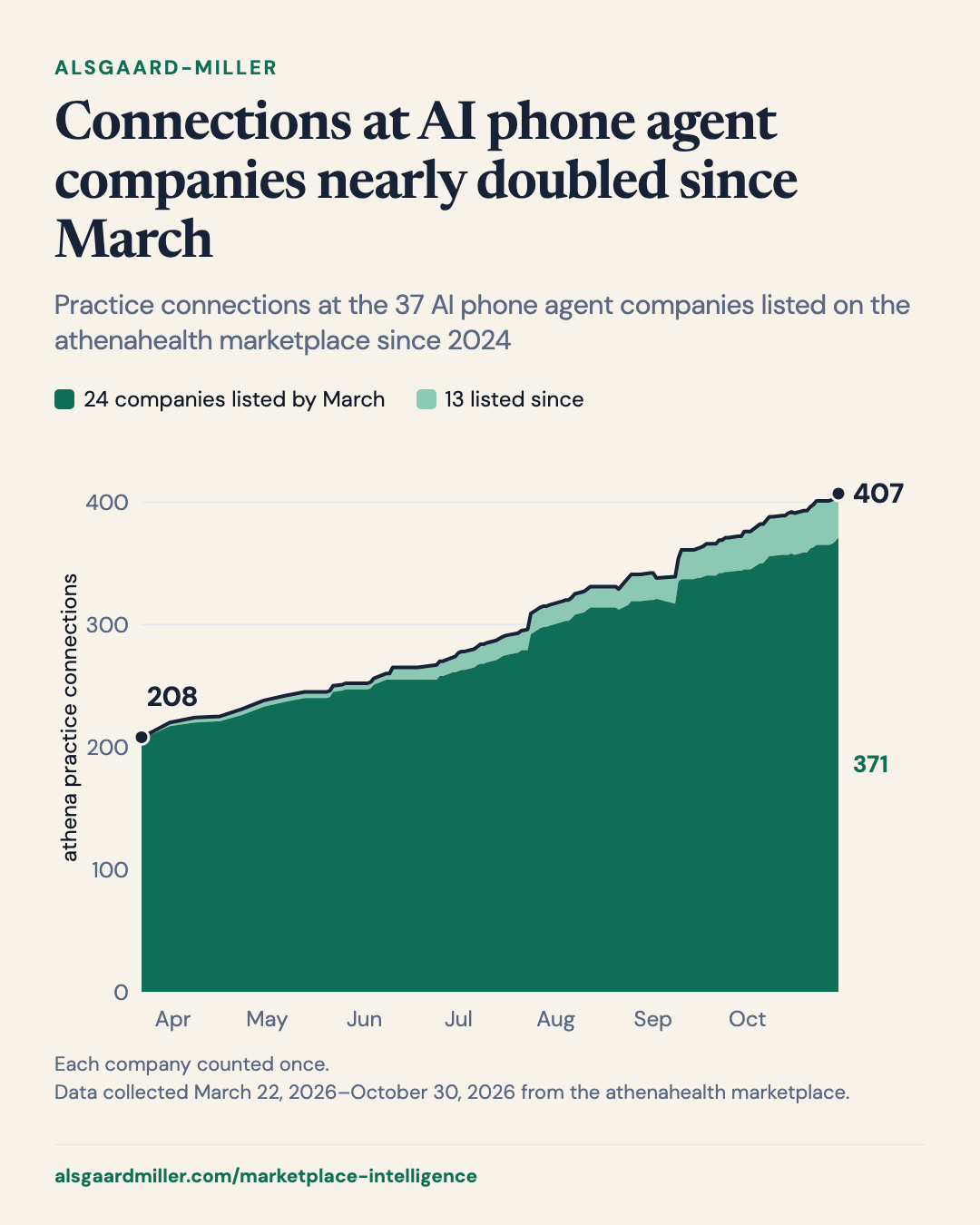
Earlier this year athena announced AI Phone Agents. As of this writing it hasn’t shipped. When I looked at the AI Phone Agents category in February, most of the startups had fewer than ten customers. athena’s announcement could have been the end for a lot of them. Instead, the companies listed by March went from 208 athena practice connections to 371. Thirteen more companies have listed since.
What’s left is the ledger
athena has always been the ledger. The ledger is the system of record. Patients, insurance, providers, the chart, the claim. Read from and written to by APIs, by humans clicking in the interface, and by RPA.
athena also sells the application layer on top of the ledger. We’re seeing athena build towards categories previously held by partners. AI is shortening development timelines on both sides, so the overlap is growing.
For practices on percentage-of-collections pricing, when a partner works denials and lifts collections, athena’s percentage applies to the lift. The practice pays the partner to do the work, then pays athena a cut of what the partner collected.
Partners have competed with athena’s core functionality for a long time. Now it’s getting serious, cutting all the way to the rules engine.
How I know
I track every company on the athenahealth marketplace, just under 600 of them. Which categories are growing, which are shrinking, and which solutions practices bought last week. I publish the data on my website.