In the last post I described athena as the ledger: the system of record, with four edges that each face a type of end user. Practice, patients, payer, health entities. Across many workflows, marketplace partners now build a better interaction on an edge than what athena offers.
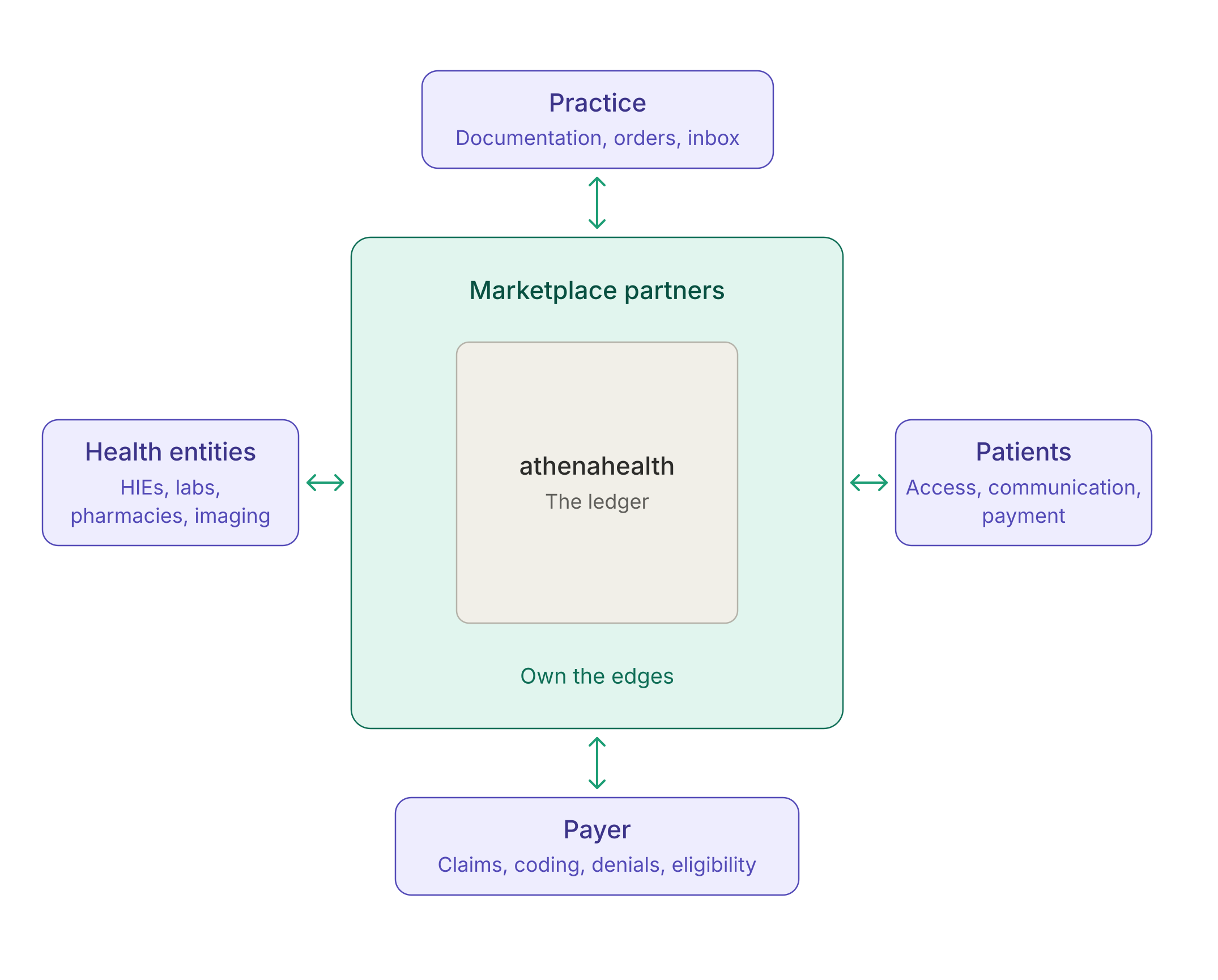
Until recently each of those partners only talked to the ledger. Now the partners on different edges have begun interfacing with each other, outside of the pipes of the ledger.
The edges are talking to each other
We’ve seen this with Heidi and R1. The problem they’re solving: when a patient and a provider are figuring out the best treatment options, they don’t know what is covered. That sucks for patients.
Heidi and R1 exchange data outside of the EHR pipes to bring treatment coverage and authorization information to the provider in the moment when they’re sitting with the patient. Heidi is in the room. R1 has the payer data.
If they filter that information through the ledger, what happens? Most ledgers don’t have a place in their database to store it, much less an API that can read or write to it. You could get creative with LLMs and free text fields, but that is error prone, and it solves a manufactured problem that should be solved upstream.
So they built their own connection. They share the information when and how they need to, while the patient and doctor are together, considering their options.
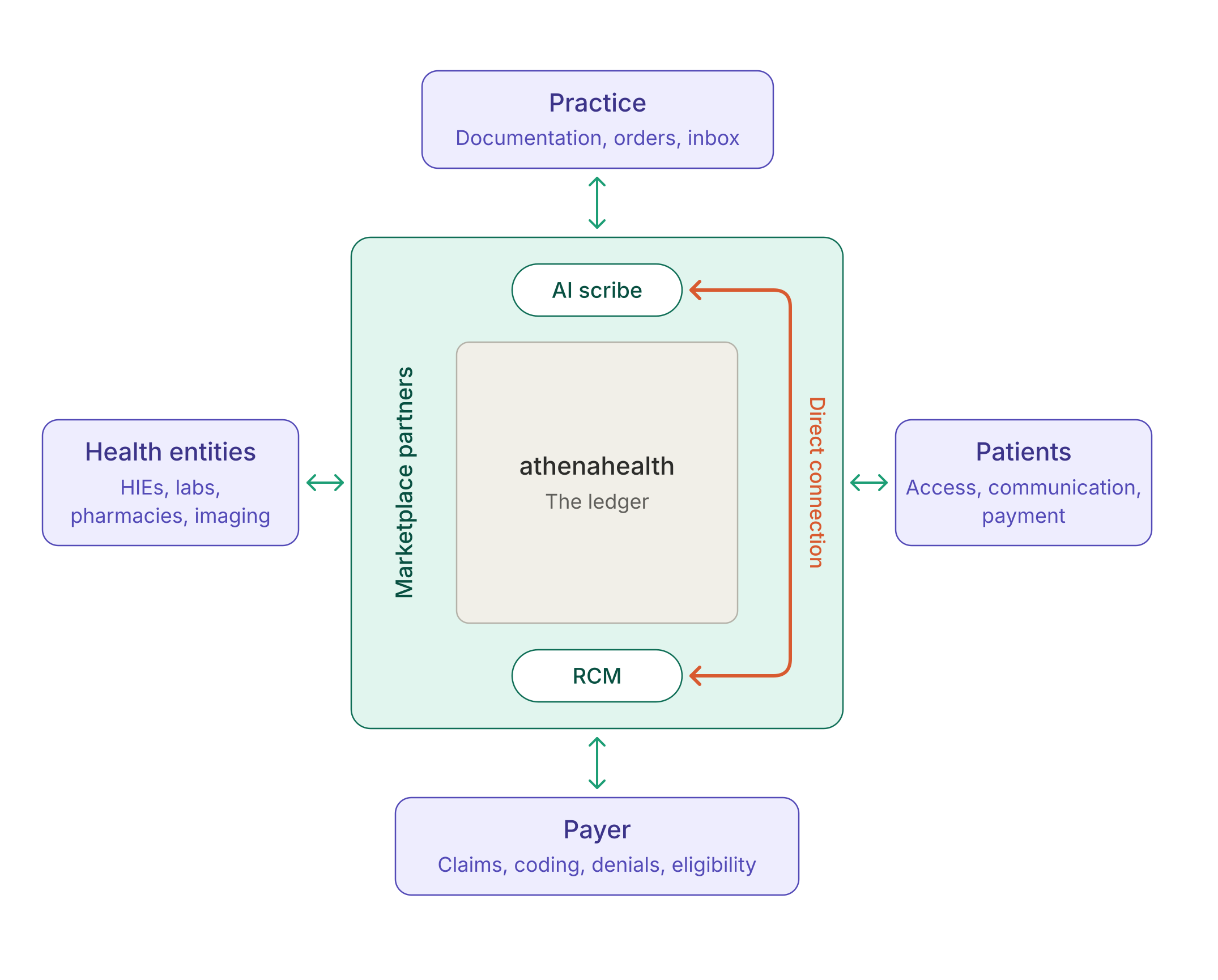
For a long time innovation moved at the speed of the ledger. That is changing.
The patient edge is next
This one is a prediction. I don’t have an example yet.
Today a prescription management platform texts patients itself, from what is the third or fourth phone number the patient has to associate with the practice. Practices don’t like that, which makes it an argument against point solutions and a win for the EHR’s native functionality.
There is an opportunity for collaboration between the company that has the Rx info, like Photon, and the partner that already manages the majority of the practice’s patient-facing communication. If the Rx company went through athena’s APIs, they’d be limited to portal messages. Connected directly, they exchange the data they need and deliver in a way that is easier for the patient.
A donut forms around the ledger
As the companies on the edges start working together, a donut forms around the ledger.
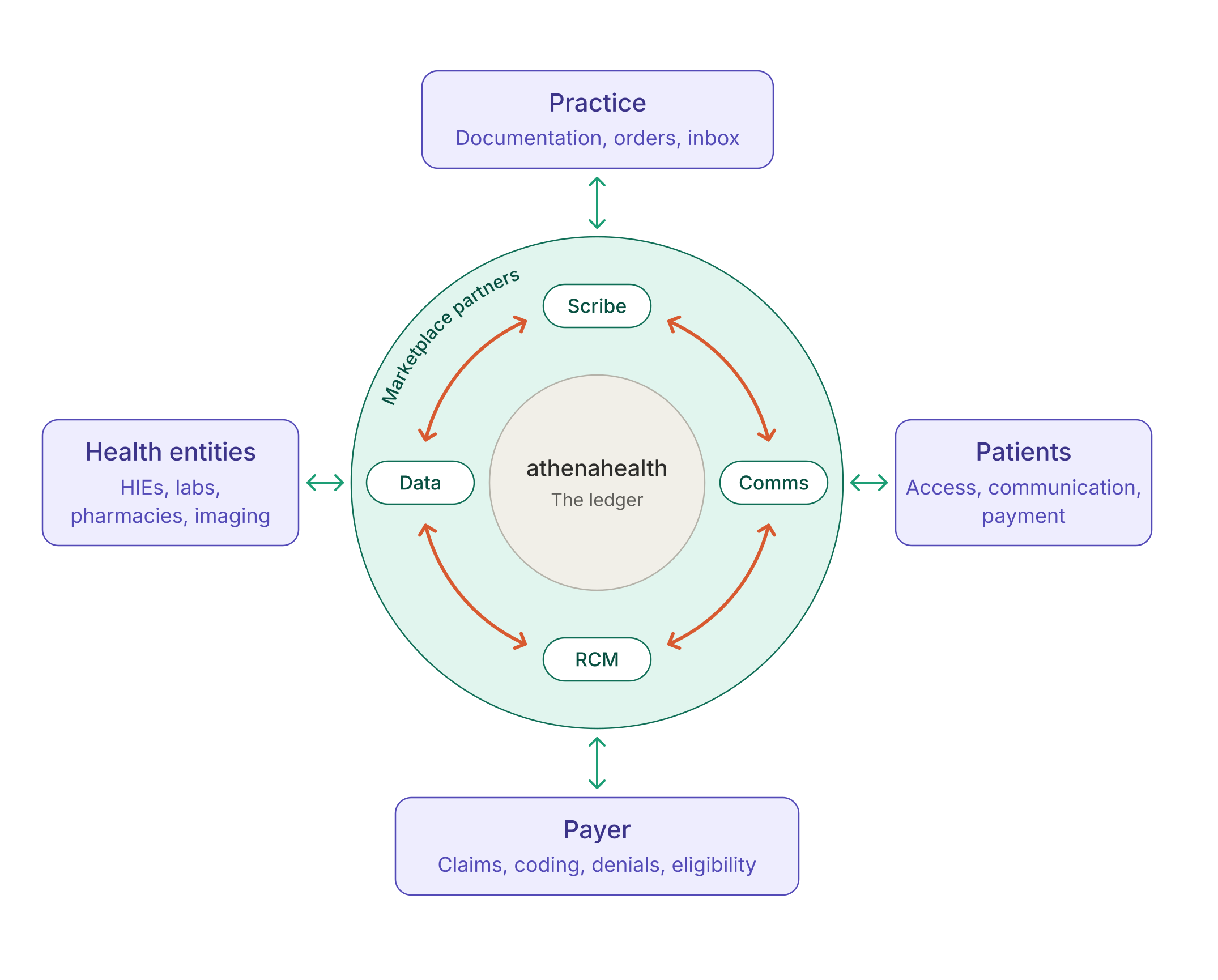
It can get built two ways. Partnerships between companies on different edges. Or one company that covers the whole donut, because it expanded that way, likely for a specific specialty, or because investors rolled it up. Flagler Health has built solutions that operate on the patient, practice and payer side for MSK practices.
Suki is expanding its reach across edges. This week at HLTH it announced Suki OS. It is starting with agents that handle prior authorization and improve clinical documentation. That is Suki moving from the practice edge to the payer edge.
Bigger provider orgs will lead the cross-edge experimentation, because they have the people and budget to support a larger tech stack.
The EHR becomes more of a ledger
The end results mostly get written to the ledger as the system of record. The ledger stops being a bottleneck, and it stops being where all of the work gets done.
That changes the coopetition dynamic. athena is going to fight to keep customers happy on those edges.