Why Your Efficiency Pitch Isn't Landing with Practices
One thing I look for when evaluating health tech companies: do they lead with revenue increase or cost savings? Mature companies do both. But early on, which story you tell determines how fast you close.
Why is a revenue increasing product easier to sell?
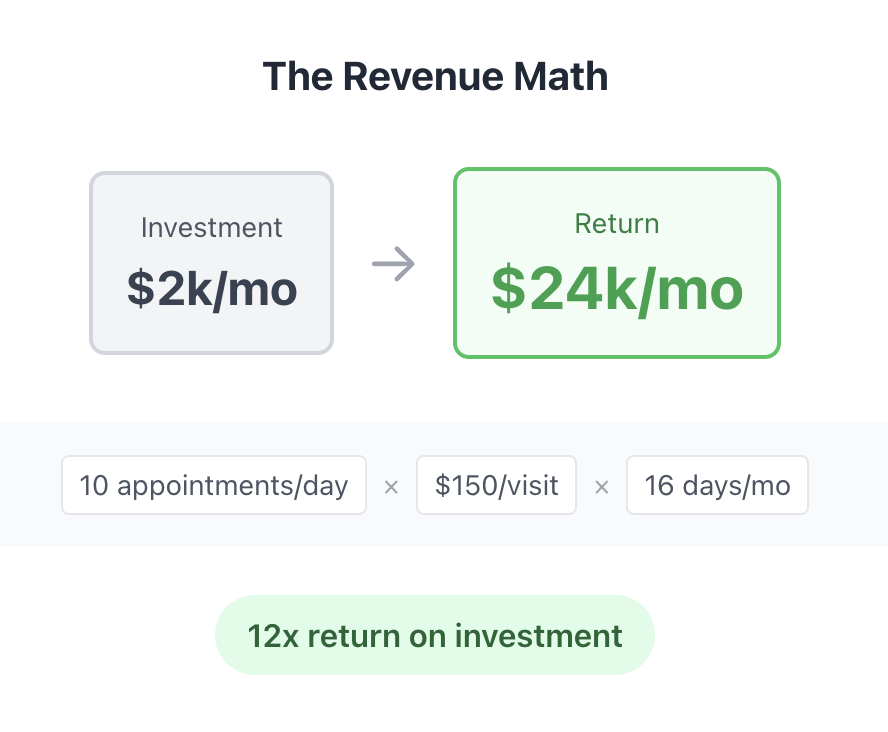
Businesses want to make money. You tell them your product will help them make more money, they're interested and their boss (if they have one) will be interested. It's easy to set aside a budget, let's say $2k a month, when you're going to add 10 appointments per day x $150 per appointment x 16 days a month = $25k.
HealthSnap, a remote patient monitoring company, explicitly repositioned from cost savings to revenue generation. Their founder said that when selling to organizations that are "hemorrhaging money," cost reduction promises fall flat. Lead with reimbursable programs and direct ROI, and the CFO conversation ends quickly. HealthSnap sells to large health systems, not independent practices, but the principle holds.
Why is a cost saving product harder to sell?
For a practice to buy a cost saving SaaS solution they have to admit to themselves and to their boss that a process already in place isn't working well and it is worth it to invest time and money to optimize or improve it. Most of the time that process is working good enough and the person who owns the process (if anyone does at all) is a worker who's not incentivized to think how it could be made better. For a leader, measuring that their team saves 10 hours a week doesn't mean much if that time is absorbed into other work that doesn't have an ROI that is being measured.
Decision makers get bombarded. Emails, LinkedIn messages, conferences, colleagues forwarding ideas. They need a filter. If you're pitching an improvement to a process they don't see as broken, you're an easy no.
Why do so many people pitch cost savings?
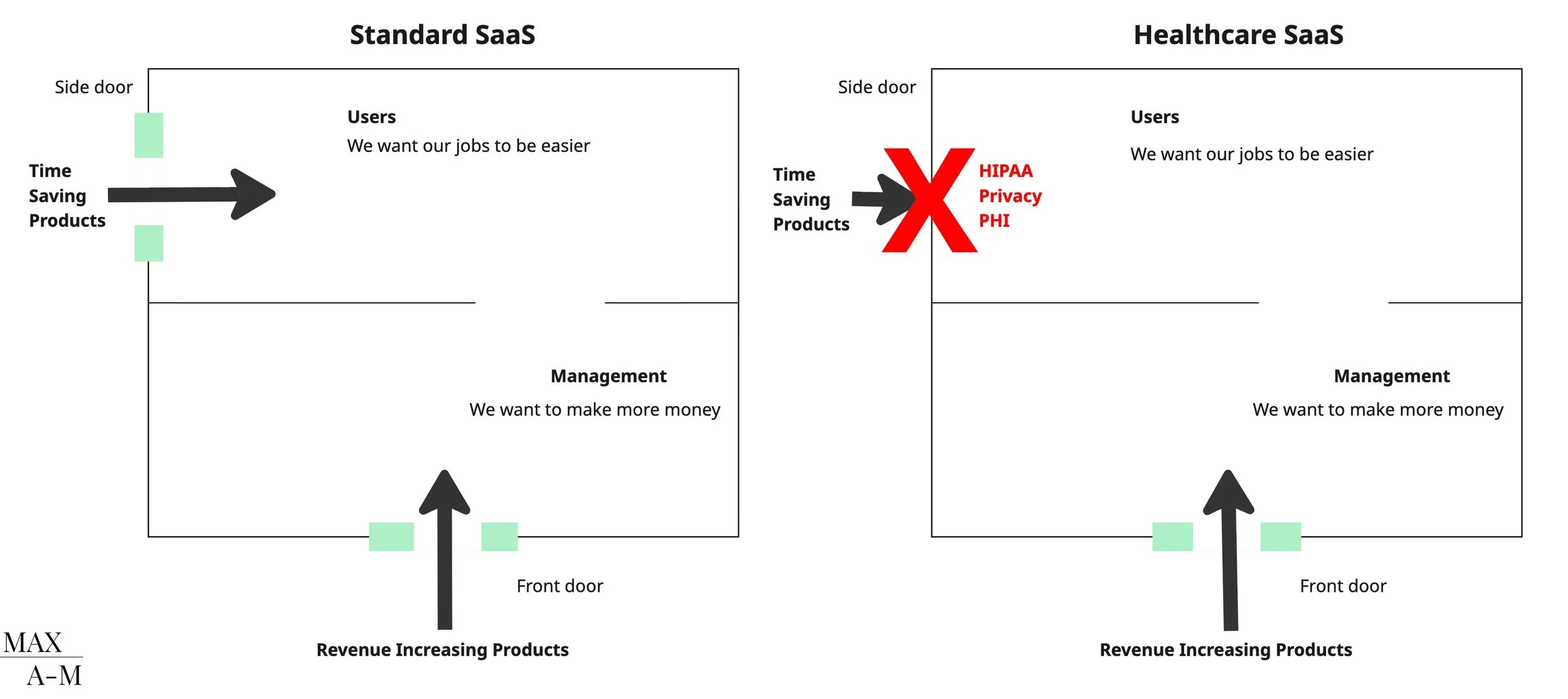
In most industries, product-led growth lets employees adopt tools and advocate internally. But in healthcare, HIPAA and privacy regulations block that side door. You have to go through the front door. And the person at the front door doesn't care about time savings unless it solves a problem they already know they have. Convincing someone they have a problem before you can sell them the solution adds a whole extra stage to your sales process. It's not impossible, but it's higher friction.
There are some exceptions
When a senior person wants their time back. Ambient AI scribes are a good example of that. Doctors hate documenting in EHRs, so it was a problem that was on a lot of people's minds and it was a problem of some of the highest paid people in the clinics. So it did get addressed.
Referrals with real numbers. Word of mouth can sell cost savings in ways your pitch can't. When a cardiologist hears from a colleague that a new device cut patient visits from four to two and they can still bill the same codes, that's a meaningful story. You can manufacture this with case studies, but they have to be specific and credible. 'Saves time' doesn't cut it. 'Cut visits from four to two, same billing codes' does.
Larger practices with efficiency roles. If you're selling to a PE-backed practice or any organization large enough to have someone whose job is finding efficiencies, you're in better shape. You still have to convince them your product does what you say, but they're already positioned to listen and champion internally. In this case you're also more likely to be measured against competitors.
Regulatory pressure. Healthcare is a highly regulated industry. Sometimes the powers that be require changes and if your customer doesn't adopt your solution, it could be existential to their business.
So what can you do about it?
The same product can often be positioned as revenue increase or cost savings. It depends on whether the founding team understands the mechanics of the clinic and the knock-on effects of their solution. Saved an hour a day (good). Added three appointments and saved 30 minutes (excellent). What that time savings gets used for is what matters.
Think about athena's pitch for Collector. It could be "we give your billers tools so they spend less time on claims." Instead it's "we help you get paid faster with less work and align our incentives so we make more money when you make more money." They walk it out one more step.
Start by asking your current customers why they bought. Not why they like the product, but why they signed the contract. What problem were they trying to solve? What did they tell their boss when they asked for budget? If the answers are about saving time or reducing hassle, dig deeper. Ask what they did with that time. That's where the revenue story often hides.
These insights are hard to gather from inside your own company. Customers tell outsiders things they won't tell vendors. If you're not sure whether you have a revenue story buried in your product, that's exactly what I help companies figure out.